
Celebrating National Sewing Month in the Axiom Space Soft Goods Lab
Humans are heading back to the Moon in Axiom Space's next-generation AxEMU suit. Meet the sewing technicians in Houston building it, stitch by stitch.
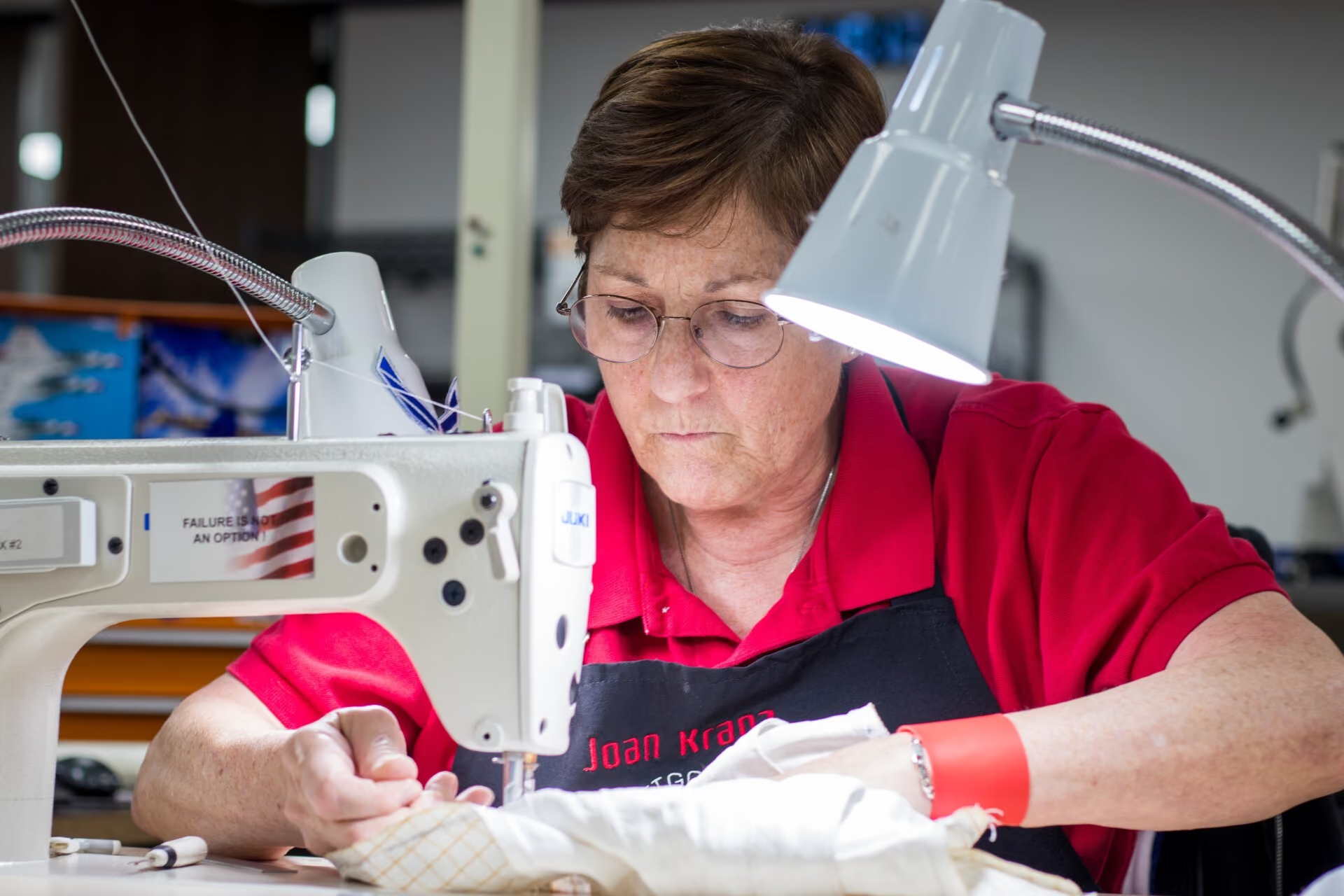
Every September, National Sewing Month honors a craft that has quietly shaped American life for generations. The observance dates back to Sept. 21, 1982, when President Ronald Reagan signed the first proclamation declaring September as National Sewing Month "in recognition of the importance of home sewing to our Nation," noting that the tens of millions of Americans who sew at home reflect "the industry, the skill and the self-reliance" that define the country.
At Axiom Space, that spirit is on full display, now applied to building the Axiom Extravehicular Mobility Unit (AxEMU), the next-generation spacesuit astronauts will wear on the lunar surface during Artemis missions. The suits are produced in the company’s Soft Goods Lab in Houston, where a team of sewing technicians’ work is measured by a fraction of an inch on hardware built to protect astronauts from the harsh environment of space.
This month, Axiom Space spotlights the people behind the suit’s soft goods and the standards that govern their work.
Spun From a Single Thread
The lab's history traces back to one hire. Nikki Brazil became Axiom Space's first sewing technician in August 2020, building spacesuit components by hand before the Soft Goods Lab expanded into the multi-group operation it is today. Brazil now serves as Soft Goods Group Lead, overseeing the operational workflow across the lab.
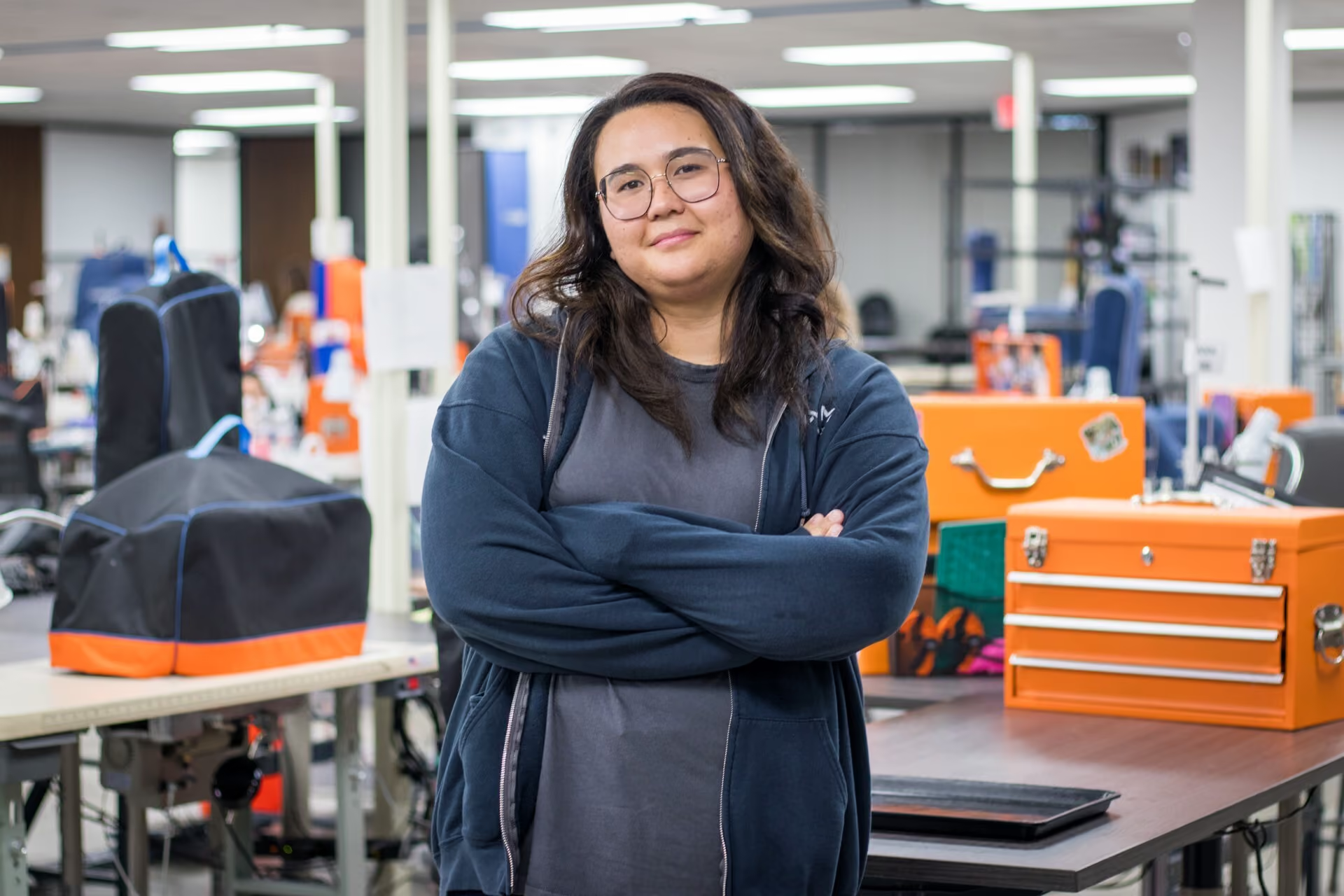
Much of that role, Brazil said, comes down to translation, serving as an intermediary between technicians on the floor and the engineers and document writers who author the specifications technicians must follow. "It has definitely made me a bridge, and I like being that bridge," Brazil said.
The lab Brazil now helps run has since absorbed technicians from theater, marine trades, fashion, and NASA's mission operations. What unites them is a single operating standard: precision.
No Margin for Error
Sewing a spacesuit component bears little resemblance to other sewing specialties. Every step arrives with written instructions specifying exactly how it must be executed, and each piece is checked multiple times before it reaches the lab's quality assurance team.
Technicians who arrive from other trades describe an adjustment period built around that standard. Linda Gomez, a sewing technician who spent years building marine canvas products before joining Axiom Space in May 2026, said the tolerances carried real weight from her first day on the job. "It means somebody's safety in the long run," Gomez said. "We have to get it right the first time."
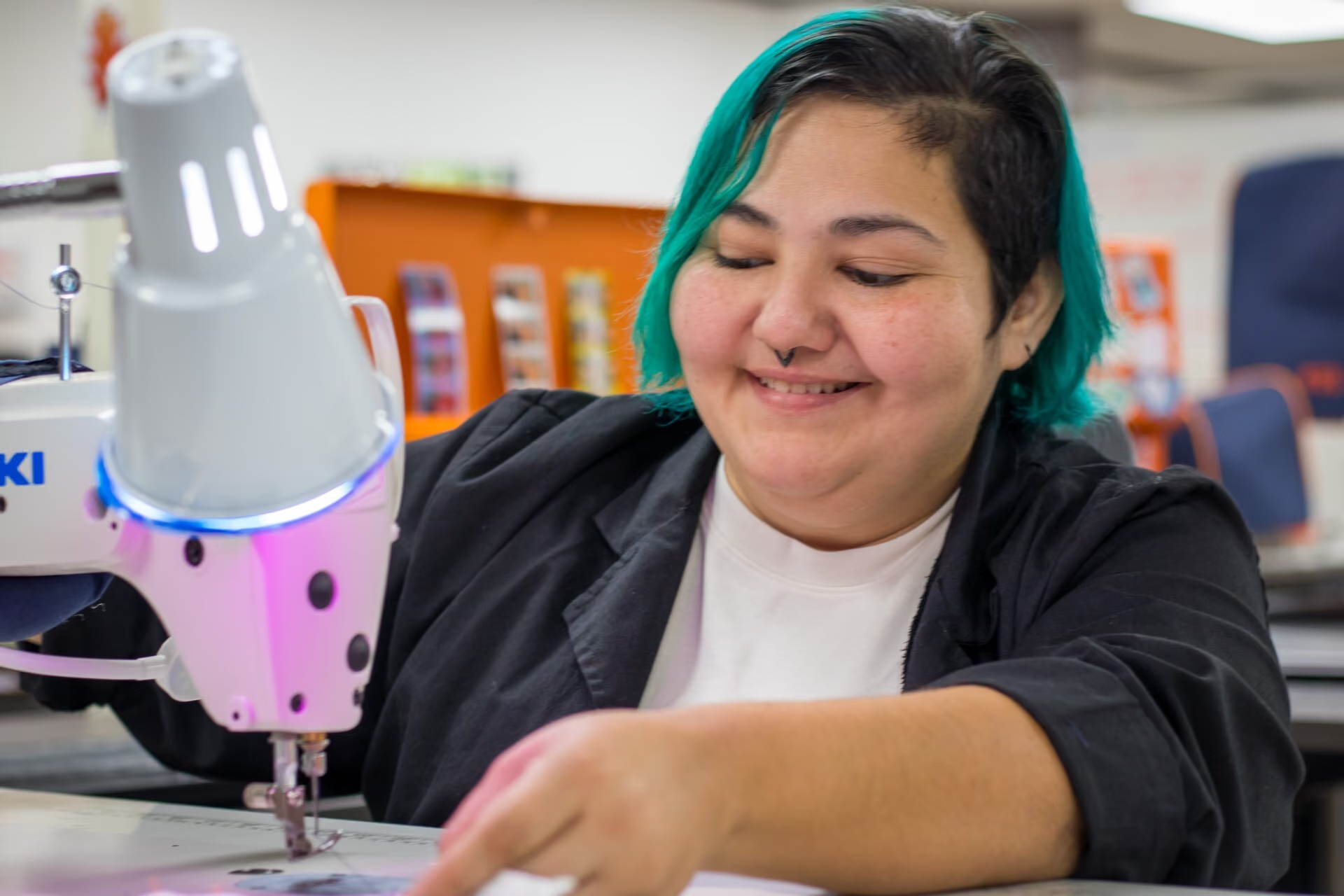
Anna Kate Reynolds, also a sewing technician, spent the three years before joining Axiom Space building costumes for Cirque du Soleil productions with Norwegian Cruise Line, where theatrical costuming runs on speed and problems get solved between shows. Spacesuit production operates under almost opposite logic, testing and re-testing every iteration before it's approved.
For Joan Kranz, a self-taught sewer who spent decades in aerospace operations — including mission control support, astronaut training, and crew scheduling at NASA's Johnson Space Center — the standard is inseparable from trust. "The astronauts are placing their trust in me as well as the Soft Goods team to sew a spacesuit with life support capability," Kranz said. "And that trust is something I don't take lightly."
Cut From Different Cloths
Axiom Space has drawn its sewing technicians from outside conventional aerospace pipelines. Gomez was recruited after a company representative found her marine canvas background online.
Reynolds applied when her grandfather urged her to, after a job listing for the position appeared on her phone while she sat with him during a chemo session last year. She had returned to Houston to help care for him and mentioned the listing half-jokingly, but he didn't take it as a joke, telling her, "You have to apply," and asking about it in the weeks that followed.
"I do have the skills," Reynolds recalled thinking. "I just have to try."
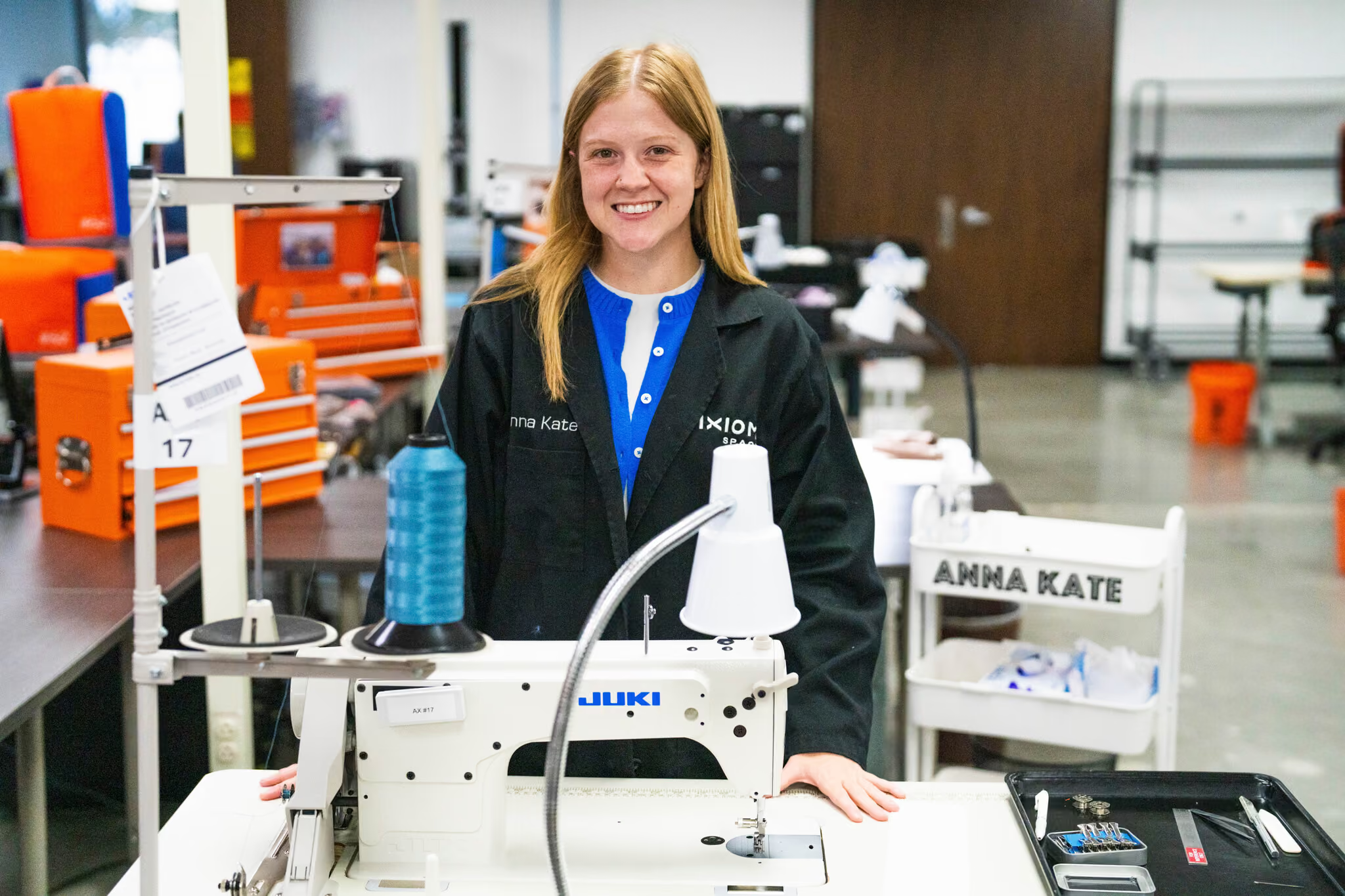
Brazil said the range of backgrounds strengthens the lab rather than complicating it. "You see people from all walks of life and then they get put into this world, and they have to sew with this precision that's different from anything in the world," she said.
Gomez pushed back on assumptions about who belongs in the trade, describing sewing as an industry that has been quietly essential throughout human history rather than something reserved for hobbyists. Reynolds offered similar advice to prospective technicians: "Any experience is good experience. It's the hours behind the machine that really add up to how well you do, not the title of your degree or all the places you've been."
Ties That Bind
For some technicians, family history runs as deep in the lab as safety requirements. Gomez's heritage lives in the craft itself: she counts six or seven generations of sewists in her lineage, tracing back through her grandmother, who sewed the family's clothes, and her mother, who ran a marine canvas business before opening her own shop in 2013. For Kranz, it lives in the mission. She is the daughter of Gene Kranz, the flight director who worked in Mission Control during Apollo 11, Apollo 13, and Apollo 17. In an industry often defined by what's new, both women are reminders that aerospace is built as much on heritage and tradition as it is on innovation.
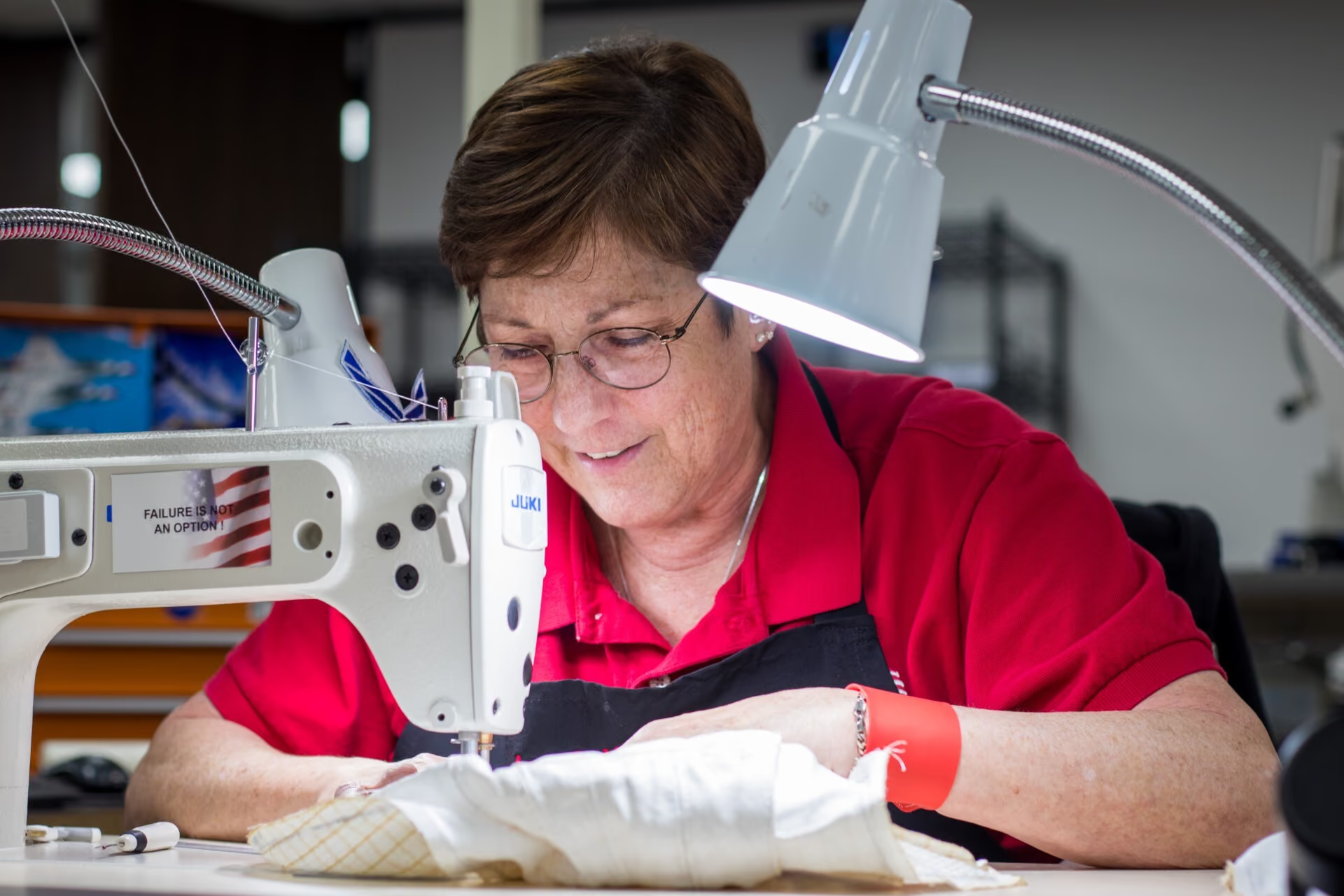
That connection became literal for Kranz earlier this year, when she was asked to modify two American flags for testing at NASA's Neutral Buoyancy Laboratory, where astronauts train for the flag-planting procedure on the lunar surface, sewing a fabric tube and pole tab into each so it would hang and stand correctly. “Watching the beautiful white stars against the navy blue background and the red and white stripes underneath my hand as I pushed the flag and fabric tube under the sewing foot…I thought, ‘This is a Godsend project.’”
With this experience, it's not lost on Kranz that Artemis carries Apollo's name forward in more ways than one. Her father guided the flight that first put American boots — and an American flag — on the Moon in 1969, and now she is helping build the suit astronauts will wear during future lunar Artemis missions.
"I'm not even sure how to put that into words, but it is big. It's bigger than me," Kranz said. "It includes all the sewing technicians in this Soft Goods Lab, who know the suits being sewn in support of the Artemis Program will allow Axiom Space to take the next giant leap on the Moon’s surface."
Looking Ahead
When astronauts return to the lunar surface in 2028, the Soft Goods Lab's output will have contributed to some of the highest-stakes spacewalks in human history with suits stitched by hand right here in Houston. Getting them there takes a specialized team from different walks of life, united by a shared pursuit in advancing human exploration and knowledge, benefiting everyone on Earth.
More than 40 years after President Reagan first proclaimed National Sewing Month, the qualities he credited to sewists everywhere — industry, skill, and self-reliance — are still very much alive, just applied to hardware bound for the Moon.
Want to learn more about the suit these stitches are building toward? Explore the AxEMU here.
Media


.svg)